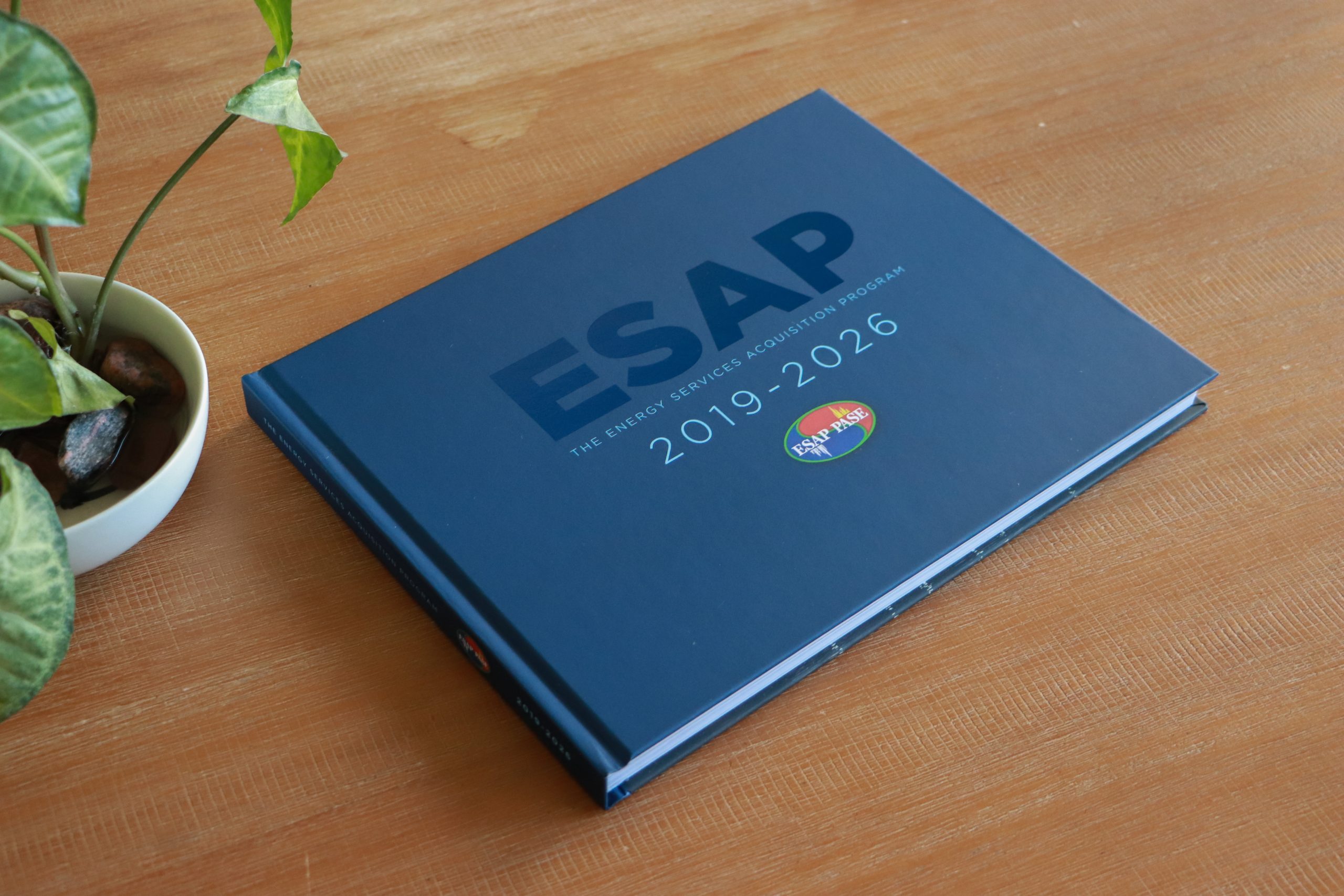
The Energy Services Acquisition Program (ESAP) was a landmark initiative undertaken by the City of Ottawa to transform and modernize the city’s energy infrastructure. To commemorate the scale and significance of the project, the City commissioned a bilingual coffee table book that would serve as both a historical record and an educational resource for the community.
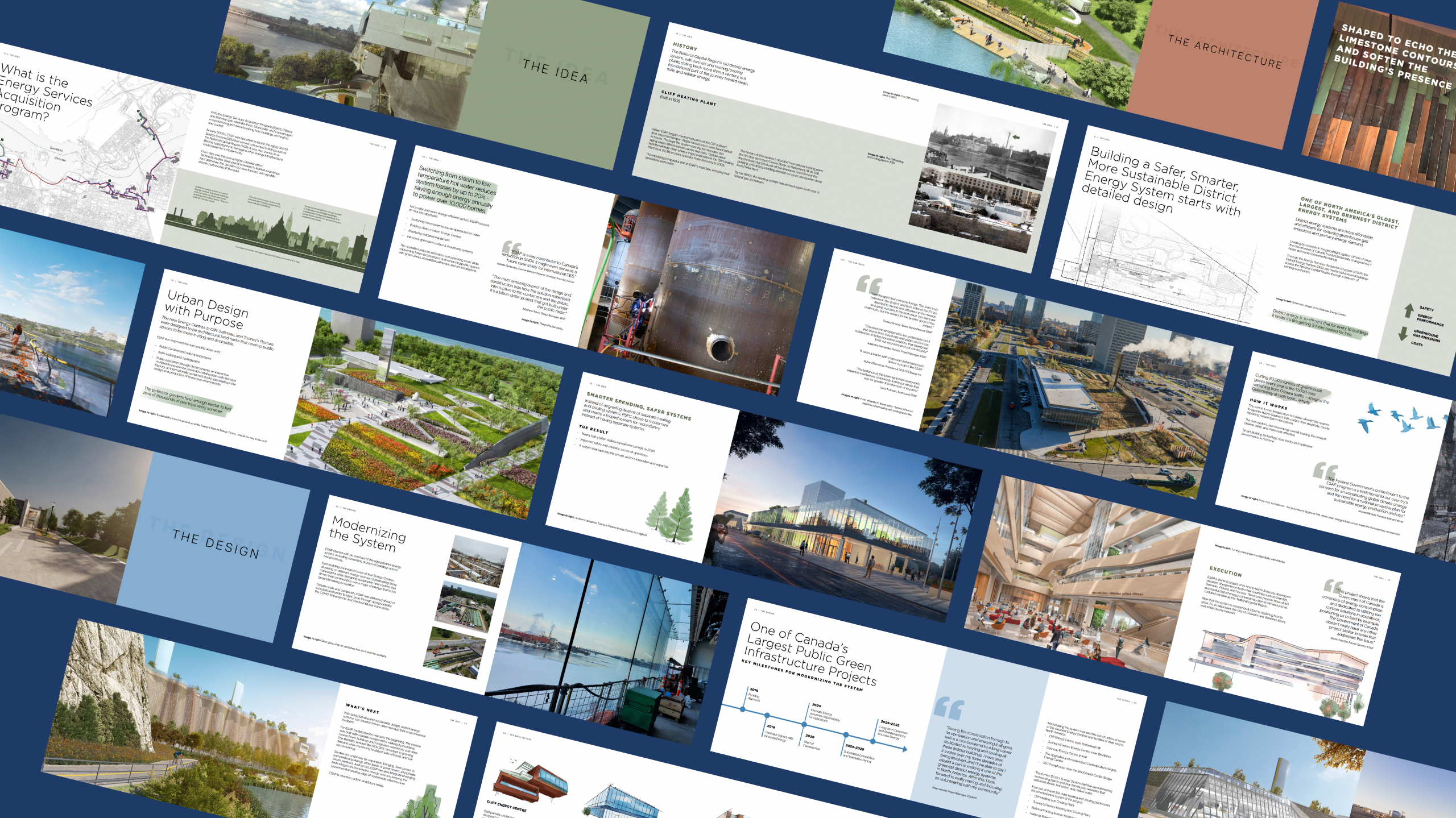
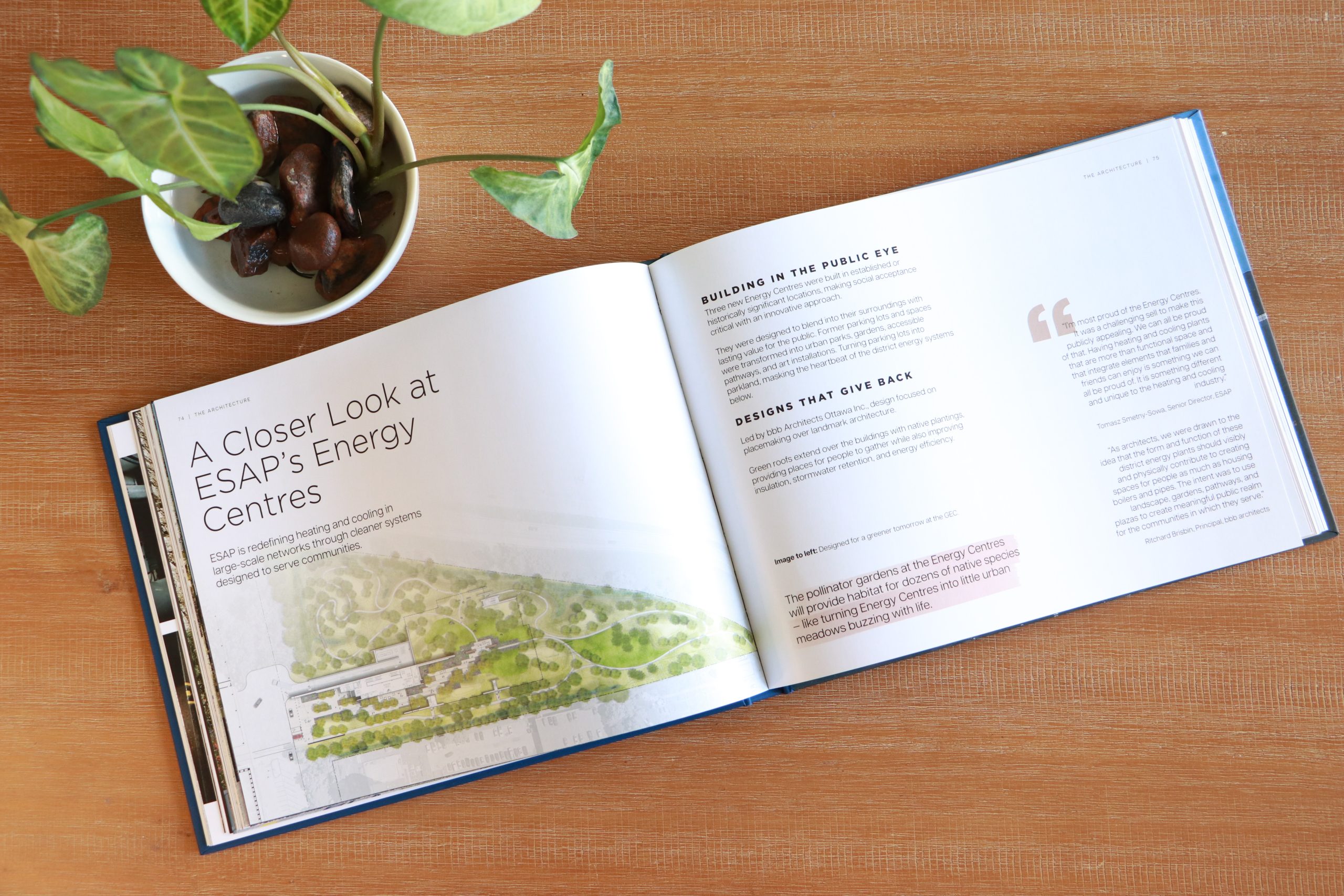
As the lead designer, I developed the book’s visual identity, established the art direction for illustrations and graphics, and designed the complete publication from cover to cover. The final piece was produced in both English and French, ensuring accessibility for Ottawa’s diverse audiences.
As lead designer on the project, I developed the visual identity with the client, then designed the entire book, from layout, pacing, cover to cover. I also art-directed a series of custom illustrations used throughout to help visualize technical concepts. Content was rewritten by a copywriter; every other element of the final book was designed and produced by me. The finished book was printed in both English and French.
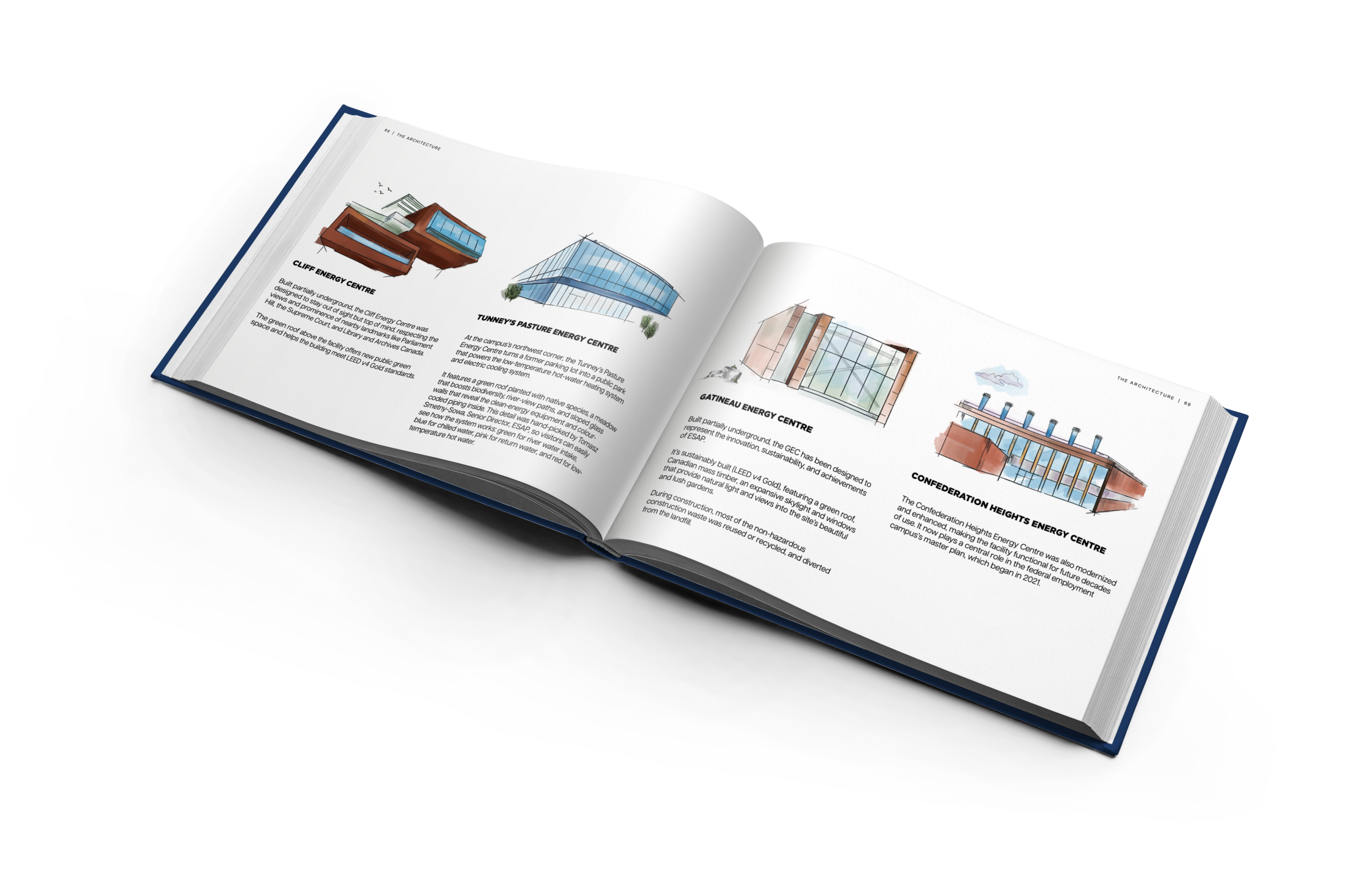
The completed coffee table book successfully transformed a complex infrastructure program into an engaging, accessible story for the community. Through thoughtful content organization, custom-designed layouts, and a cohesive visual identity, the publication documented the history, challenges, and accomplishments of the Energy Services Acquisition Program in a way that resonated with both technical and non-technical audiences.
The book served as a lasting commemorative piece, preserving the legacy of a major public initiative while demonstrating transparency and accountability to the communities it serves. Printed in both English and French, the bilingual publication ensured broad accessibility across the National Capital Region, and the custom visual language elevated the book beyond a traditional report — creating a polished, memorable editorial experience.
The final result was a comprehensive publication that balanced information, storytelling, and design — capturing the scale of the project while making its impact understandable and meaningful to the community it serves.